
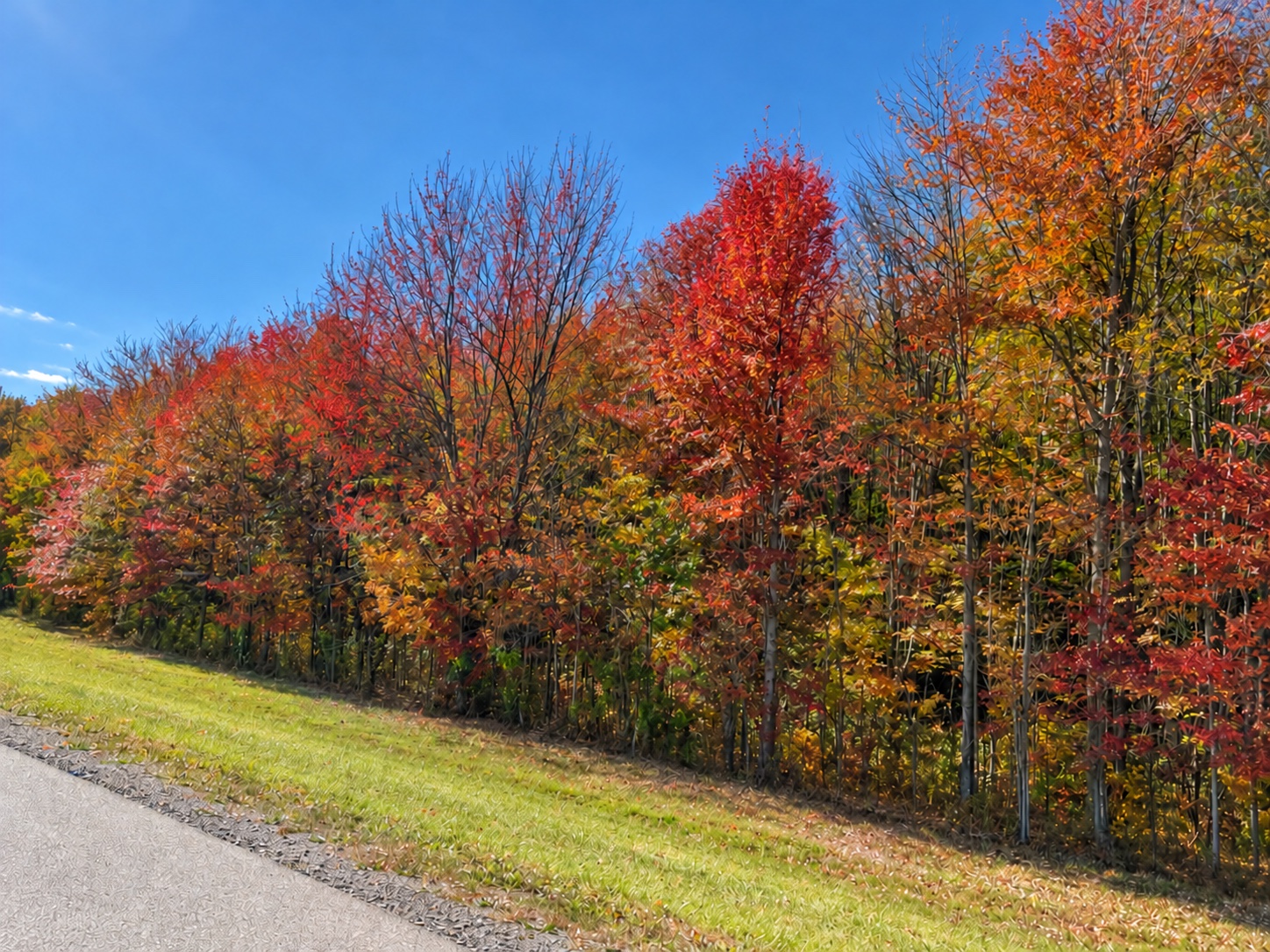
While traveling through New York State to admire the fall foliage, our journey took us through the Adirondack Mountains. Up we climbed through vibrant yellows, burnt oranges, and velvet reds. Then, around a bend and over a crest, down, down, down we went through a sea of color.
After a few hours, I noticed something that surprised me: we were getting better gas mileage on those winding mountain roads than we had on the interstate.
Climbing the mountains stored energy in the car as potential energy. On the descents, gravity helped carry us downhill as that potential energy became kinetic energy. Our hybrid could also recover spent energy through regenerative braking. Every time the EV indicator lit up, we enjoyed what felt like “free” power—drawing, in part, on energy we had already used to climb.
Although this route appeared more demanding and energy-consuming, we were using less fuel. And the majestic views along the way were ones we would never have seen from the easier path—the path more traveled.
The road hadn’t changed, but I had. My understanding of what that path actually required had changed. At first, all I saw was the expected climb. But as I traveled that path, it revealed its true self to me and shared its splendor and beauty.
It made me think about the paths we choose in life and in our nursing practice. A path that looks harder at first may not be as difficult as we imagine. And choosing what seems like the easier path may mean missing an amazing journey, the beauty we might discover in others, and the person we could become along the way.